

18072885002






Membrane fouling is an unavoidable problem in all membrane separation systems during long-term operation. This article will systematically explain the causes, classifications, and prevention and control logic of membrane fouling, and then discuss how to reduce fouling at its source and simplify cleaning and maintenance by leveraging the inherent properties of membrane materials.
I. Classification of Main Components of Membrane Fouling
Membrane fouling refers to the phenomenon in membrane filtration where microparticles, colloids, or large solute molecules in water are adsorbed and deposited on the membrane surface or within the membrane pores due to physicochemical or mechanical effects, leading to pore size reduction or blockage and an irreversible decrease in membrane flux and separation performance. It should be noted that membrane fouling begins as soon as the feed solution comes into contact with the membrane.
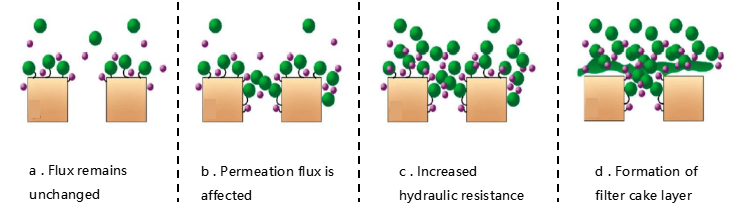
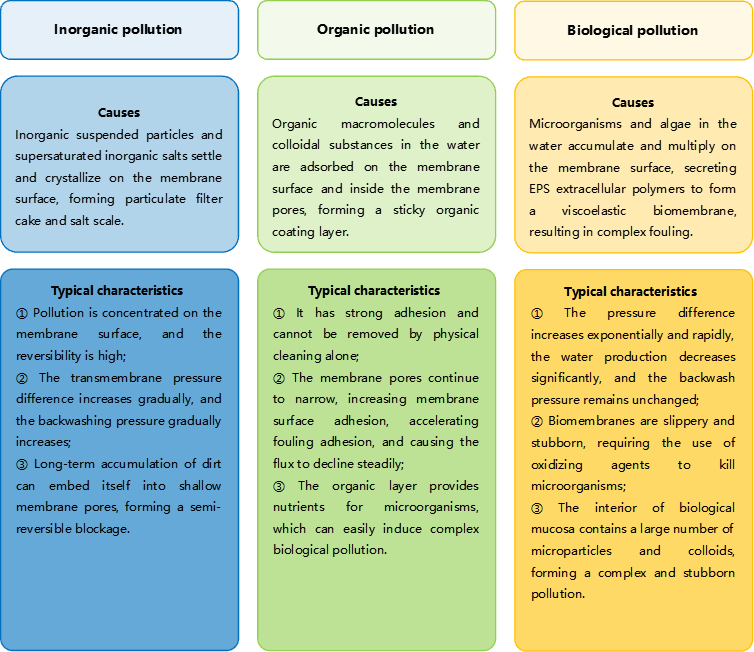
Membrane fouling include inorganic fouling, organic fouling, and biological fouling. In actual system operation, one type of fouling may be dominant, or multiple types of fouling may act together. It is best to complete the full composition testing of raw water before the project is put into operation to identify the dominant fouling type and match the corresponding pretreatment scheme, thereby reducing the fouling load from the source and extending the membrane's service life.
II. Membrane Fouling Control Measures
Membrane fouling control mainly follows the control measures that can effectively inhibit fouling accumulation and delay performance degradation.
(I) Source pretreatment
|
Pollution type |
Pretreatment control measures |
|
Inorganic pollution |
Adjust pH and hardness, add scale inhibitors, and use multi-media/security filters to trap particles. |
|
Organic pollution |
Coagulation and flocculation, activated carbon adsorption, and early interception of large molecular organic matter. |
|
Biological pollution |
Pre-disinfection, control of nitrogen and phosphorus nutrients, and reduction of influent microbial population. |
(II) Optimization of operating parameters
By regulating the flow state of the membrane surface using fluid dynamics, the rate of pollutant accumulation is reduced. Membrane flux is rationally controlled, and the surface velocity is appropriately increased to reduce the rapid migration of solutes to the membrane surface. Intermittent evacuation of concentrate alleviates concentration polarization and reduces pollutant adsorption and deposition. Regular cleaning is implemented to extend membrane lifespan.
(III) Cleaning Process
are divided into conventional physical cleaning and deep chemical cleaning:
● Conventional physical cleaning, including water backwashing and air-water scrubbing, periodically removes the surface inorganic filter cake, which only delays inorganic pollution and cannot remove organic adsorption and biological slime.
● Regular chemical cleaning: This process is initiated periodically based on the differential pressure threshold. It removes contaminants through chemical reactions, restoring membrane permeability. Common contaminants and cleaning agents are as follows:
|
Types of pollutants |
Specific pollutants |
Cleaning agents |
|
Inorganic substances |
Calcium carbonate, iron salts and inorganic colloids |
Citric acid, hydrochloric acid, or oxalic acid solutions with a pH of 2 |
|
Barium sulfate, calcium sulfate, and other sparingly soluble inorganic salts |
Approximately 1% EDTA solution |
|
|
Organic matter |
Fat, humic acid, organic colloids, etc. |
Sodium hydroxide solution with pH=12 |
|
Grease and other stubborn organic contaminants |
0.1%-0.5% sodium dodecyl sulfate, Triton X-100, etc. |
|
|
Protein, starch, oil, polysaccharides, etc. |
0.5%-1.5% of protease, amylase, etc. |
|
|
Microorganism |
bacteria, viruses, etc. |
Approximately 1% hydrogen peroxide or 50 ppm sodium hypochlorite solution |
(IV) Optimization of membrane material selection
The intrinsic physicochemical properties of membrane materials determine the fouling adhesion rate, cleaning tolerance, and long-term degradation rate. Under the same water quality and operating parameters, the characteristics of the membrane material directly determine the upper limit of its antifouling resistance.
|
Membrane material properties |
Main introduction |
|
Surface interface properties |
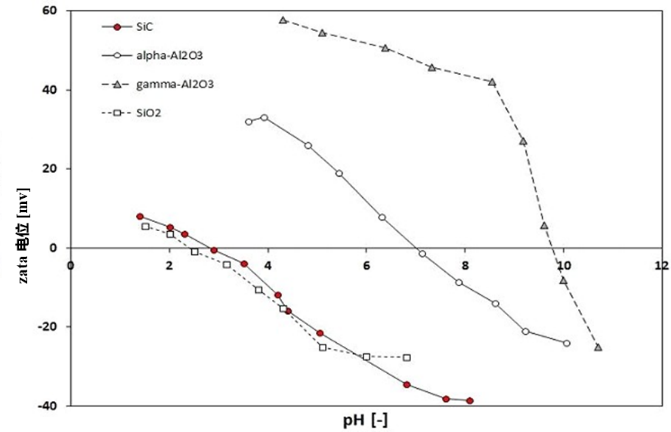
The hydrophilicity, isoelectric point, and surface roughness of the membrane surface determine its adsorption tendency. Highly hydrophilic and low-roughness membranes rely on the water membrane barrier and electrostatic repulsion to reduce the adsorption of colloids and organic matter, thus mitigating pollution at its source. |
|
Chemical stability |
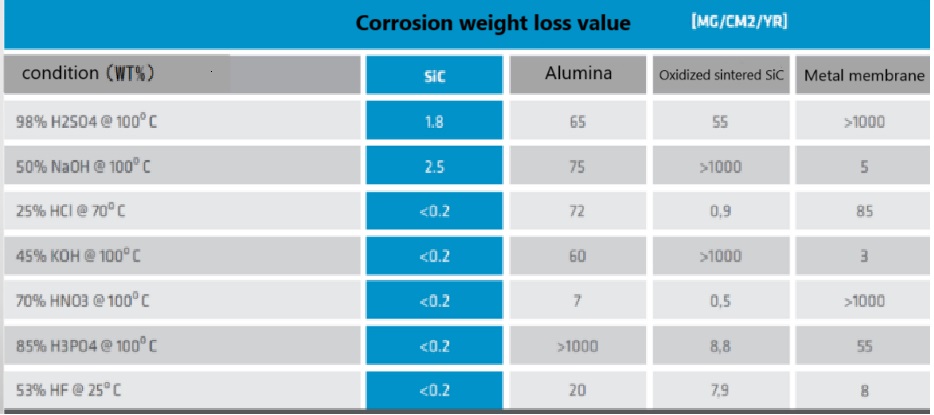
the strength of chemical cleaning. Membrane materials resistant to acids, alkalis, and oxidants can withstand full-intensity chemical cleaning without swelling or oxidative damage. |
|
Mechanical structural performance |
The mechanical strength and density of the membrane affect its resistance to erosion and crystallization abrasion. High-strength membrane materials can withstand high cleaning intensity and high membrane surface flow rate, continuously inhibiting filter cake thickening. |
III. Why Choose Silicon Carbide Ceramic Membranes
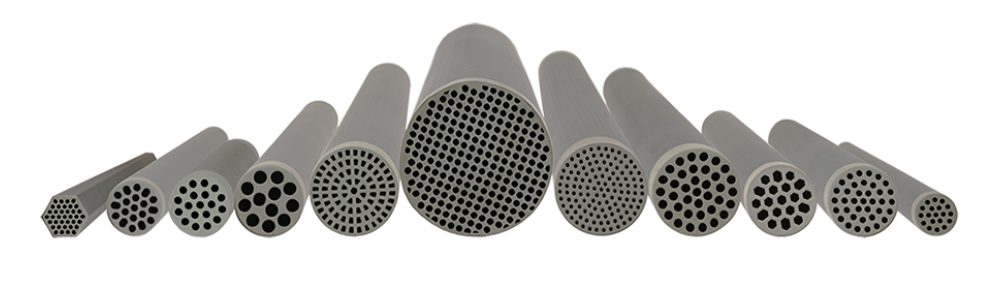
Silicon carbide ceramic membranes are made from high-purity silicon carbide fine powder through recrystallization and sintering technology, achieving microfiltration and ultrafiltration levels. They feature high flux, corrosion resistance, easy cleaning, and long lifespan, and are currently the membrane material with the best hydrophilicity and antifouling capabilities.
(I) Excellent hydrophilicity of silicon carbide membrane
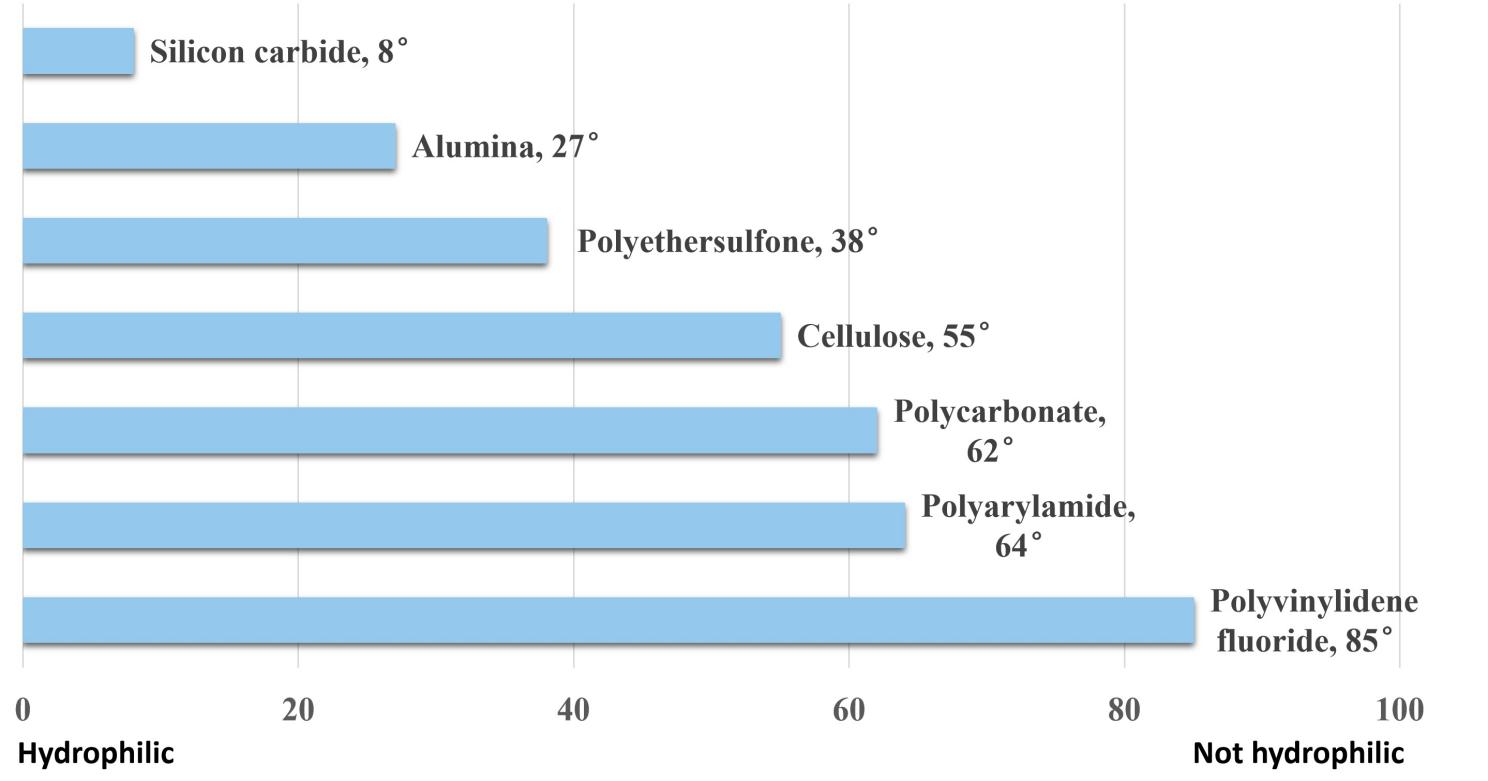
Membrane materials with better hydrophilicity are less prone to fouling and are easier to clean and restore after fouling. Furthermore, under the same driving pressure, membrane materials with better hydrophilicity have a higher water flux. The hydrophilicity of membrane materials is often measured by the contact angle. Silicon carbide nanoparticles, during recrystallization and sintering, exhibit no shrinkage or liquid phase, ultimately forming a porous, interconnected network framework structure with a porosity exceeding 45%, achieving ideal hydrophilicity with a water contact angle of only 8°.
(II) Excellent chemical stability of silicon carbide membrane
Silicon carbide membranes have strong chemical resistance and can be used for a long time in acids and alkalis, easily solving various scaling problems.
(III) The outstanding antifouling properties of silicon carbide membranes
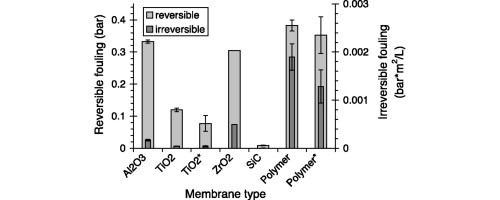
Silicon carbide membranes are currently the membrane materials with the strongest negative charge, capable of removing grease and microorganisms, and have excellent anti-fouling properties.
|
|
|
|
Figure - ζ-potential of various ceramic membrane materials |
Figure - Surface Water Test |
|
Source: Farsi, Ali. Department of Chemistry and Bioscience, Aalborg University |
Source: Comparison of ceramic and polymeric membrane permeability and fouling using surface water, 2011. Hofs et al. |
Understanding membrane fouling mechanisms is key to the scientific operation and maintenance of membrane systems. We welcome your feedback on water quality conditions and membrane operation challenges in the comments section. Jianmo Technology focuses on the R&D, production, and complete system delivery of silicon carbide ceramic membranes, providing a full -chain service including membrane element customization, system integration, and operation and maintenance optimization. Please feel free to contact us anytime if needed !