

13396532368






In rubber glove production workshops, the rinsing process of ceramic molds after demolding produces wastewater containing release agents and particulate matter. Directly discharging this wastewater would not only waste resources but also pose a potential environmental burden. Silicon carbide ceramic membrane systems are now providing an efficient solution to this problem.
JMFILTEC's independently developed silicon carbide ceramic membranes, with their unique separation properties, acid and alkali resistance, and anti-fouling properties, are perfectly suited to the use of alkaline mold release cleaning agents. They precisely capture release agents and fine particulate matter in the rinsing wastewater, significantly improving the clarity of the treated rinse water and allowing it to be directly reused in the mold rinsing process. This means that rinse water, once discarded, is now recycled, reducing both fresh water consumption and wastewater treatment costs. Furthermore, silicon carbide ceramic membranes maintain stable flux over long periods of operation, significantly reducing the frequency of membrane module maintenance.
Case Study - Rinsing Wastewater Recovery System Project of a Materials Company
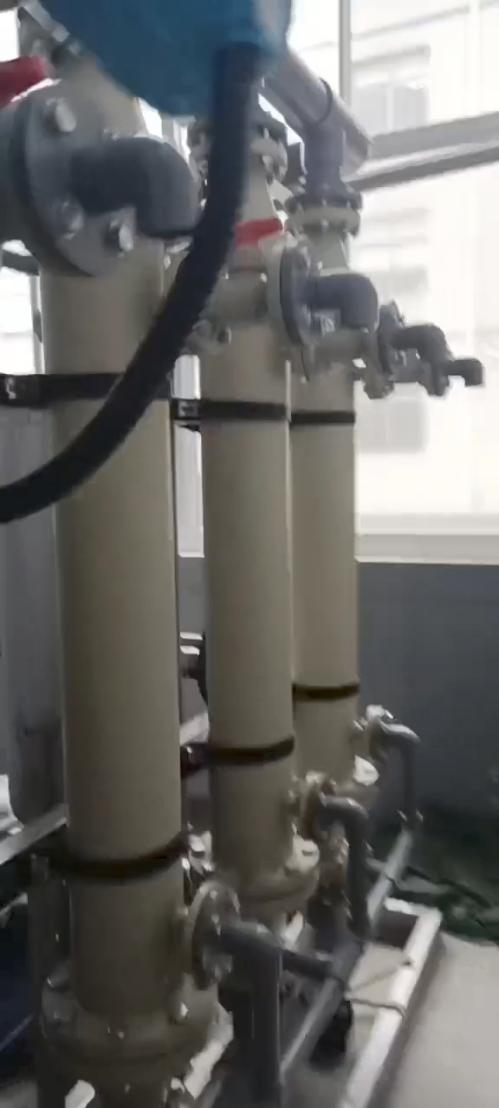
(1) On-site Photos
(2)Process flow

Figure 1 Rinsing waste liquid recovery process
(3) Value Analysis
The system's release agent and particulate removal rate is as high as 99.9%, and the rinse water reuse rate is over 80%.
(4) Process Advantages
● Water recycling: Easily realize the resource utilization of rinse wastewater;
● Significant cost reduction: Reduce fresh water consumption and wastewater treatment costs, achieving the dual benefits of cost reduction and efficiency improvement;
● Worry-free and stable: Fully automated operation, no dedicated personnel required, excellent alkali resistance of the equipment, and safer production.
From "wastewater" to "recyclable water", silicon carbide ceramic membranes not only promote the green transformation of rubber glove production, but also interpret the environmental protection concept of "saving water and reducing consumption". In the future, with the continuous upgrading of membrane technology, it is believed that more industrial scenarios will usher in new possibilities for resource recycling.