
18072885002

CONTACT US
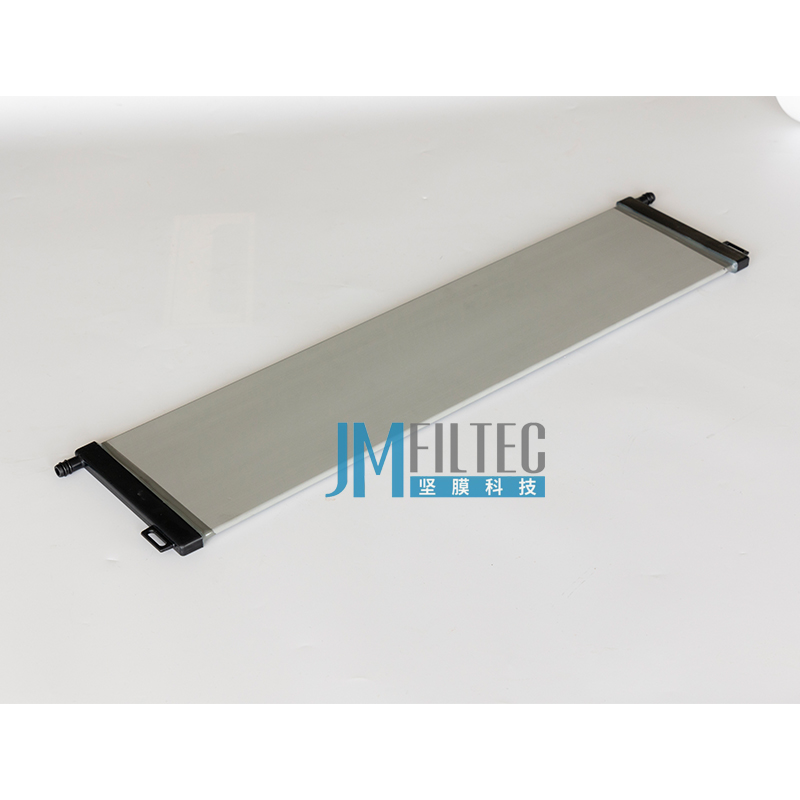
This plate is our flat sheet module elements, our module is assembled by 42 pcs of this plates. It is a 100% SiC membrane.
Materials have always driven the iteration of membrane separation products and the development of their application technologies.
Silicon carbide is a new generation of ceramic membrane separation material recognized in the industry. Compared with ceramic membrane products made of alumina/zirconia materials, they have significant advantages such as high flux, corrosion resistance, easy cleaning, long life, and excellent oil-water separation performance.
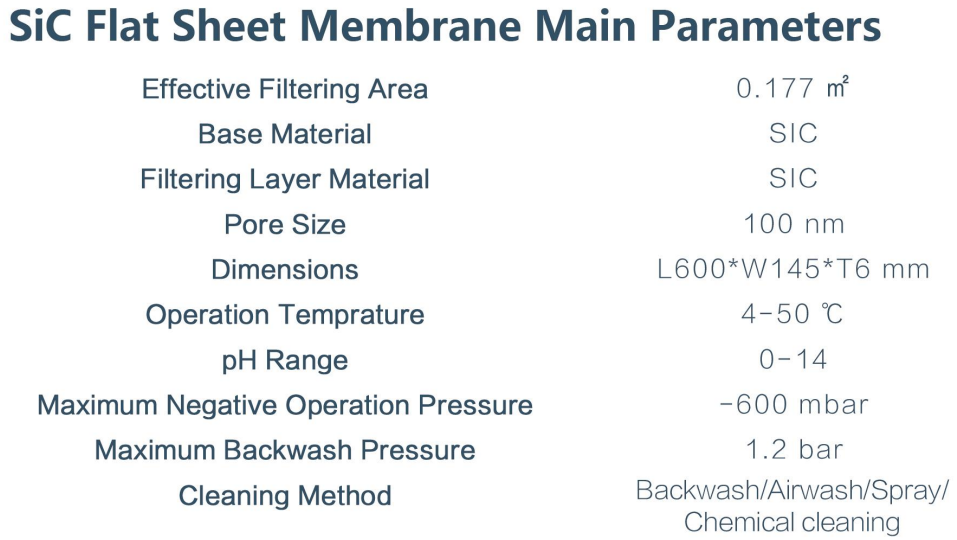
Its dimension is;
The advantages of flat sheet are:
1. High flux
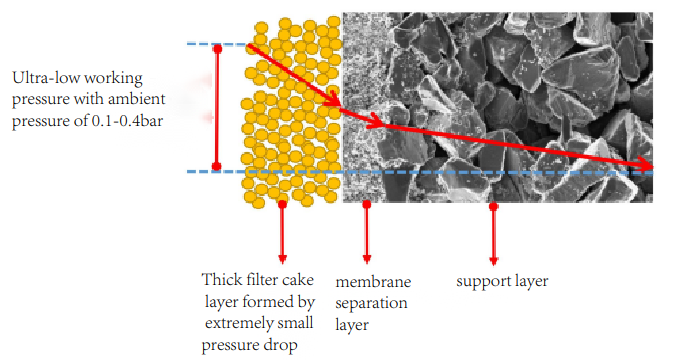
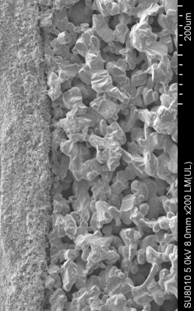
The silicon carbide ceramic membrane has a beautiful trapezoidal pore structure and is composed of a 0.04um tight microporous separation layer, a 0.5um tight microporous sub-separation layer and an 8um loose macroporous support. The resistance of the filtrate penetration process is small. Its structure also allows high volume of water passing by.
2.Highly hydrophilic
Silicon carbide material is highly hydrophilic, with a water contact angle of only 10.3°, far exceeding that of ceramic membrane products made of alumina/zircon.
3. Preservative
Alumina/zirconia materials are amphoteric oxides. Their chemical activity is much higher than that of silicon carbide materials. They are more susceptible to corrosion and are not resistant to other highly corrosive agents such as hydrofluoric acid. However, silicon carbide has stable chemical properties and can even Resistant to hydrofluoric acid corrosion.
4.Easy to clean
First of all, the isoelectric point of silicon carbide nanoparticles is near pH 2.4. In a wide pH range, the interface between the separation layer and the filter medium can maintain a negative charge environment to form a special anti-fouling and oil-repellent effect, and the colloid and suspended matter , oil droplets and other substances are not easy to adhere to the membrane surface, and backwashing can easily "peel" colloids, suspended solids, oil droplets and other substances from the membrane surface; secondly, the trapezoidal pore structure and the high porosity of the silicon carbide membrane (fewer dead pores, Good filter channel connectivity) can increase the backwash effect. These features make it a easy cleaning plate.
5. Longevity
Silicon carbide (SiC) ceramic membranes are known for exceptional longevity due to several key characteristics:
5.1. Chemical Resistance
5.2 Mechanical Durability
5.3 Thermal Stability
5.4 Fouling Resistance
5.5 Structural Integrity Over Time
6. Filtering manner:Dead-end.
Also called normal flow filtration.
6.1 How it works
6.2 Key characteristics