

18072885002

CONTACT US
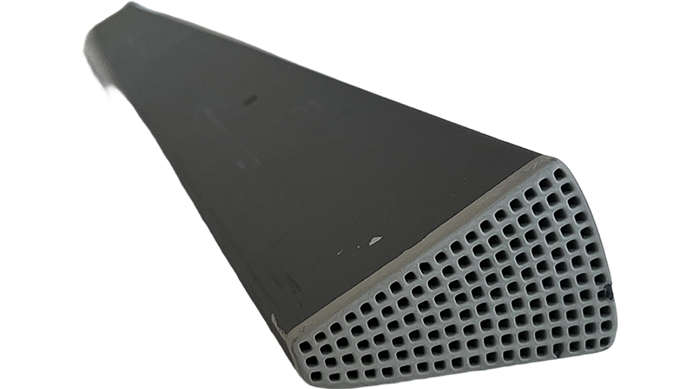
SiC Ceramic Tubular Membrane Element
Here's a comprehensive introduction to the tubular element that makes up SiC ceramic tubular membrane modules:
☆ Shape & Dimensions
The tubular element has a cylindrical (tube) shape, typically with:
| ● Outer diameter: 25–40 mm (common standard sizes) |
| ● Inner diameter (channel bore): 6–20 mm, depending on the number of channels |
| ● Length: 500–1500 mm per element |
| ● Wall thickness: 2–5 mm |
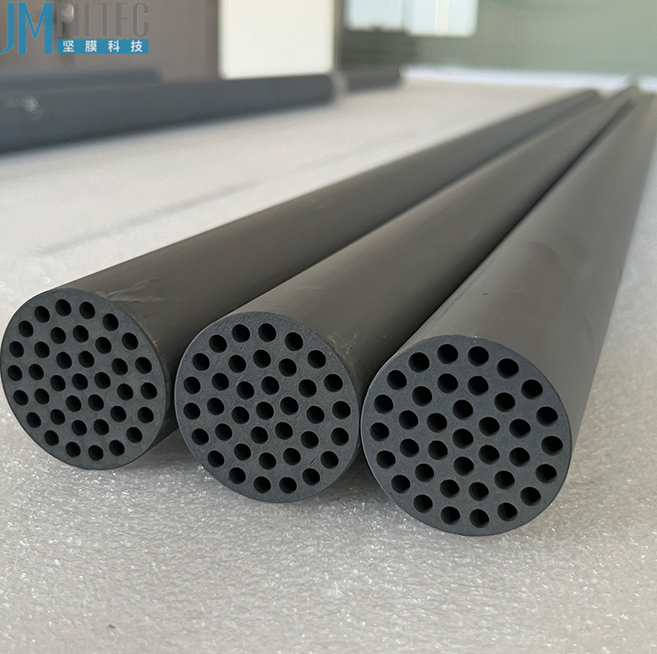
Many tubular elements are actually multi-channel (honeycomb) designs — meaning a single cylindrical body contains multiple parallel channels (e.g., 7, 19, or 37 channels) running through its length, maximizing filtration area in a compact form.
☆ Structure (Layer by Layer)
The tubular element has a asymmetric multi-layer structure:
| Layer | Role | Typical Pore Size |
| Support layer (substrate) | Mechanical strength, macroporous | 10–100 µm |
| Intermediate layer | Transition, reduces defects | 1–10 µm |
| Membrane (active) layer | Actual separation/filtration | 0.02–1 µm (MF/UF range) |
The SiC active membrane layer is sintered or coated onto the inner channel walls, so filtration occurs from the inside-out — feed flows through the channels, and permeate passes radially outward through the membrane wall.
☆ Key Advantages of the SiC Tubular Element
① Exceptional Chemical Resistance SiC is inert to strong acids, alkalis, and organic solvents across a wide pH range (pH 0–14), making it suitable for aggressive industrial environments.
② Outstanding Mechanical Strength High hardness and rigidity allow operation under high transmembrane pressures without deformation or cracking.
③ Thermal Stability Can operate continuously at temperatures up to 800°C+, far exceeding polymer membranes and even most other ceramics.
④ Hydrophilic Surface SiC naturally has a hydrophilic surface, which reduces fouling tendency and makes cleaning (CIP/CEB) more effective — a major operational advantage.
⑤ Long Service Life Ceramic elements typically last 10+ years, significantly longer than polymeric hollow fiber or flat sheet membranes.
⑥ High Flux Performance The smooth, low-friction SiC channel surface allows high permeate flux with lower energy consumption compared to alumina or zirconia ceramics.
⑦ Backwashable Unlike polymeric membranes, SiC tubular elements can withstand vigorous backwashing to restore permeability, reducing downtime.
☆ Typical Applications
| ● Oily wastewater treatment | ● Municipal water & drinking water | ● Food & beverage processing |
| ● Mining & mineral processing | ● Pharmaceutical separation | ● Produced water (oil & gas) |
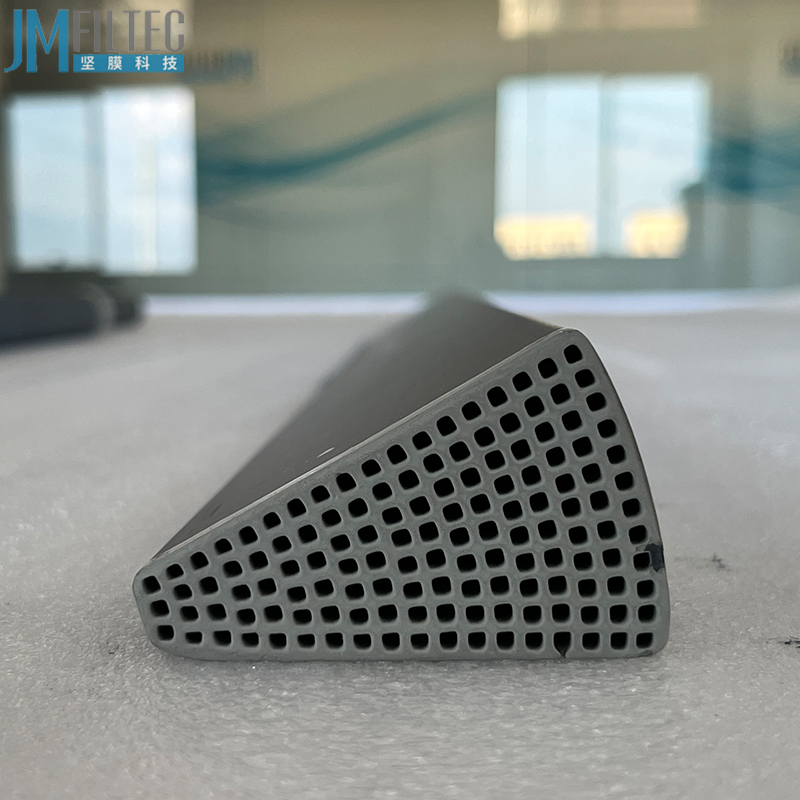
☆ JMFiltec tubular membrane element
| 1. Sector | 2. Round one | |
 |
 |
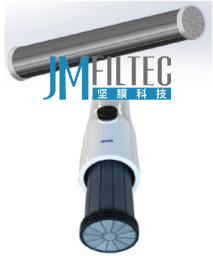
☆ JMFiltec tubular module, we also call them column module
 |
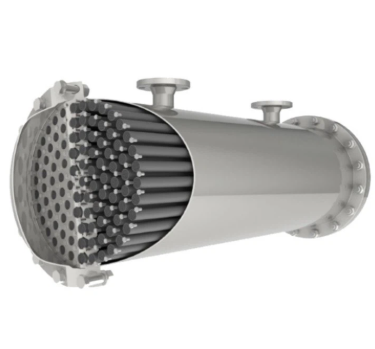 |
☆ JMFiltec tubular module vessel material
| 1. Fiberglass | 2. Stainless steel | 3. UPVC |
You can choose according to using environment
In summary, the SiC tubular element is the core functional unit of the module — its multi-layer asymmetric structure, combined with SiC's unique material properties, delivers superior filtration performance, durability, and chemical resilience compared to conventional membrane materials.