
13396532368

CONTACT US
Product Description
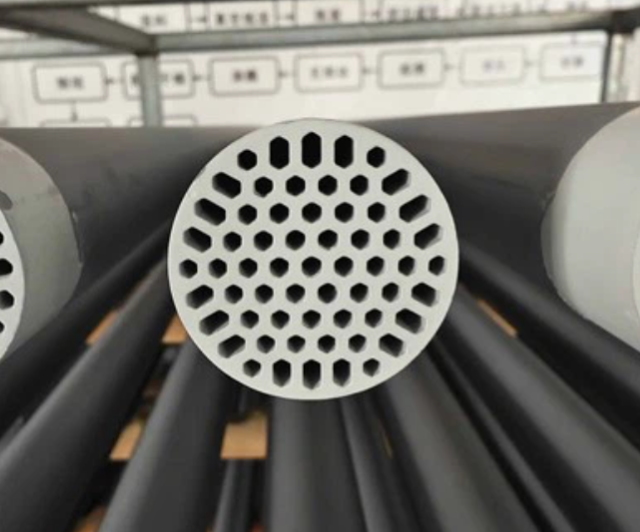
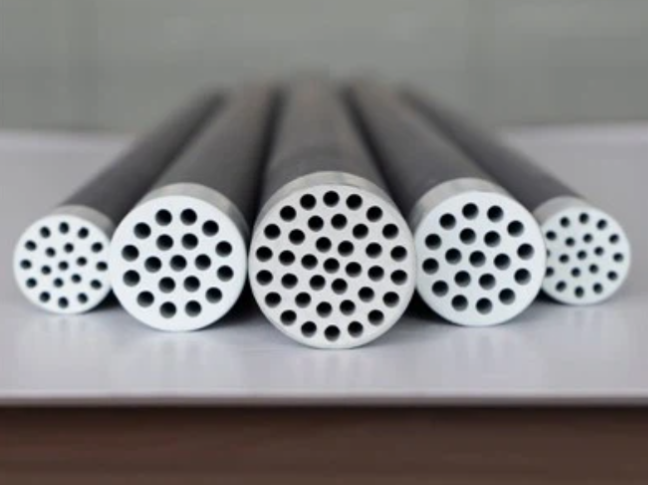
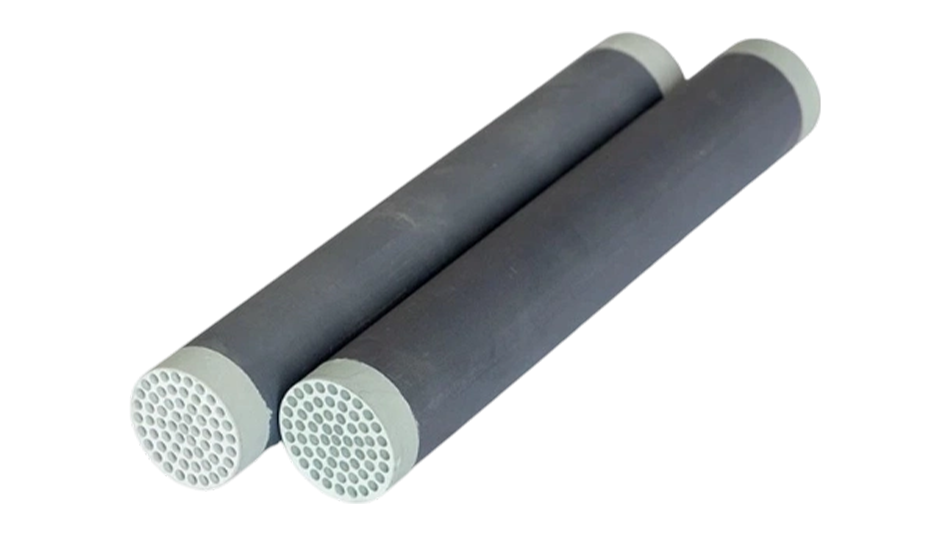
Silicon carbide ultrafiltration membrane filtration adopts the form of "cross-flow filtration". The raw material liquid flows at high speed in the membrane tube. Under pressure, the clarified permeate containing small molecular components passes through the membrane dense layer in the vertical direction, and the turbid concentrated liquid containing large molecular components is intercepted, thereby achieving fluid clarification, separation, concentration and purification.
Structural characteristics
01 Multilayer structure: It is usually composed of a porous support layer, a transition layer and a membrane layer. The overall structure is composed of silicon carbide (SiC) material. This structure gives silicon carbide ultrafiltration membranes a variety of excellent properties.
02 Membrane layer thickness: The separation layer plays a major role in filtration. Its thickness is generally 0.03μm. The thinner the membrane layer, the higher the filtration efficiency and the lower the energy consumption.
Performance advantages
Good chemical stability: Multilayer structure: It is usually composed of a porous support layer, a transition layer and a membrane layer. The overall structure is composed of silicon carbide (SiC) material. This structure gives silicon carbide ultrafiltration membranes a variety of excellent properties.
Excellent thermal stability: Can withstand high temperature environment, generally can withstand high temperature below 1500℃, operate stably under high temperature conditions, and have good thermal shock resistance.
High mechanical strength: Silicon carbide itself has extremely high hardness and mechanical strength, which enables silicon carbide ultrafiltration membrane to withstand high pressure and high load conditions, high membrane bonding strength, good wear resistance and long service life.
Good hydrophilicity and oleophobicity: It has good affinity for water and oleophobicity for oil, so it can efficiently separate oil and water and effectively remove oil pollutants in water.
High open porosity and large flux: Compared with conventional tubular membranes, under the same conditions, its equipment has high integration, small footprint, low energy consumption and small investment.
High filtration accuracy: The filtration accuracy covers microfiltration, ultrafiltration and nanofiltration, and the highest filtration accuracy can reach 20 nanometers, which can effectively remove particles, oil droplets, emulsions and suspended solids, and meet various water purification needs.
Material safety: Ultra-high temperature sintering, single composition, no residue, no heavy metals, and meet the safety standards of medical level.
Application fields
Water/wastewater treatment industry: It can be used to treat various industrial wastewater and domestic sewage, such as steel plant leveling wastewater treatment, which can effectively remove suspended particles, oil pollutants and heavy metals, while retaining useful components; it can also be used for municipal sewage treatment to achieve water purification and reuse.
Oil and gas industry: In the development of oil and gas fields, it can treat produced water, and deal with the problems of complex water quality and difficult treatment of produced water. It has the characteristics of high filtration accuracy, short process, small footprint, high integration, and stable water output.
Chemical Industry: In corrosive environments such as acid and alkali treatment and catalyst recovery in the chemical industry, it can be used for separation, concentration and purification of materials to improve production efficiency and reduce costs.