

13396532368

CONTACT US
Details:
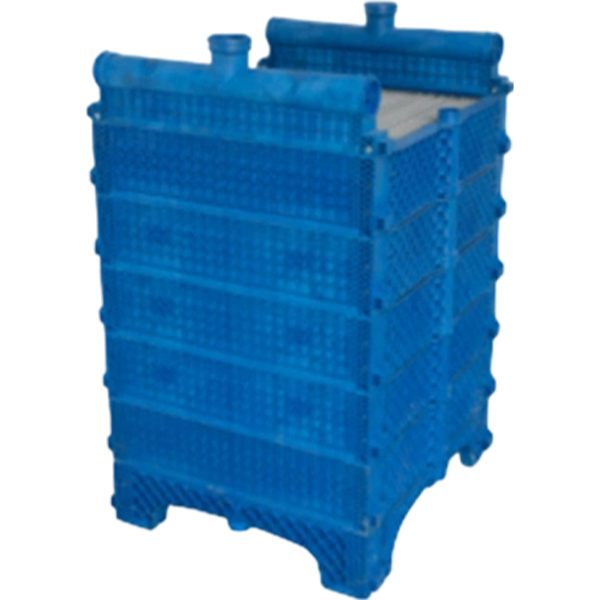
JMtech-SICFS-600x145x6-0.177-34-Module towers
This product has 34 flat sheet membranes for one layer, effective filter area for one layer is 6m2, filter accuracy 100nm. Each tower can contain 1-10 layers, normally within 8 layers. This product is customized for overseas customers to adapt to foreign filtering systems.
The silicon carbide flat sheet membrane modules we design and produce are modular, expandable filtration units consisting of a glass fiber reinforced plastic shell and flat sheet ceramic membranes.
The membrane module integrates water production channels internally and can withstand high pressure. Our membrane modules have undergone CFD fluid mechanics simulations and actual testing to achieve the best performance of flat sheet ceramic membranes. Each standard membrane module contains 2 water production channels, with a maximum water production capacity of up to 1200LMH (9m3/h). None of the shell and the components contains any mental, so it can be used in the harshest applications while extending its service life. Additionally, there is no need for surrounding frames or hose connections between membrane modules.
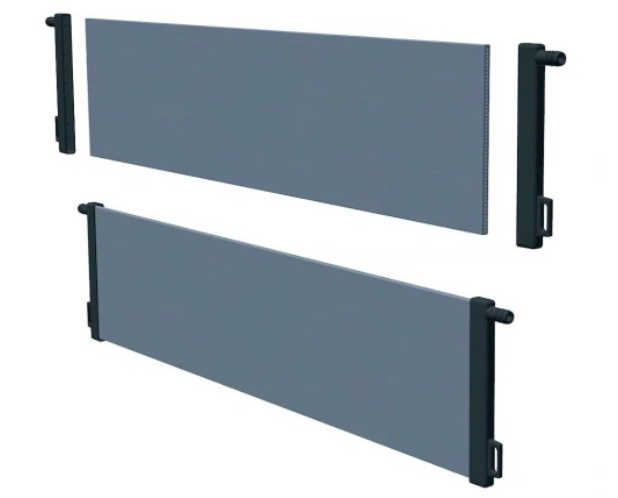
Silicon carbide flat sheet membrane is made by sintering high-purity silicon carbide powder at high temperature, and is currently the membrane material with the best hydrophilicity and anti pollution ability.
● The membrane surface with high negative charge can ensure excellent pollution resistance across a wide pH range;
● Ideal operating conditions - when the PAC addition makes the pH less than 6, the membrane surface can maintain a negative charge of -25~-30 millivolts, making it difficult for soluble organic carbon and transparent exopolymer particles to adhere to the membrane surface;
● It is easy to remove negatively charged substances in water from the membrane surface, such as bacteria, algae, MLSS, transparent exopolymer particles, and oil substances.
★ The core material silicon carbide has good hydrophilicity, higher porosity, excellent cleaning recovery ability, and no fear of oil pollution;
★ High-throughput operation requires less filtration area and saves significant costs;
★It has good anti-pollution performance, is resistant to water inlet fluctuations, and has stable long-term operating flux;
★It has good chemical stability, acid and alkali resistance, strong oxidant resistance, high temperature resistance, organic dissolution resistance, good washability and easy recovery of flux after cleaning;
★ Suitable for seawater and other challenging applications without any corrosion risks;
★ Full modularity allows the number of membrane modules per membrane tower to be changed at any time to optimize project costs or increase future processing capacity;
★ The most compact design - no need to set up independent water production pipelines, the membrane system is highly integrated;
★Competitive investment cost and excellent life cycle.
Membrane bioreactor
Pretreatment of seawater desalination
High standard purification of drinking water
Solid liquid separation of inorganic particles
Sludge concentration
Powder activated carbon coupled full amount dual effect filtration (removal of PFAS)
The application advantages of immersion ultrafiltration technology with silicon carbide flat sheet membrane in high turbidity wastewater in the semiconductor industry:
1. High flux, membrane flux ≥ 300LMH, low investment cost;
2. Low energy consumption and low operation and maintenance costs;
3. High recovery rate (up to ≥ 95%), with organic membranes ranging from 75% to 85%.
Power plants are one of the most water-intensive industrial industries, and their cooling process water accounts for a major part of the total water consumption of power plants.
The amount of cooling water used is affected by many factors such as unit type, fuel type, cooling system type, climate, water source conditions, etc.
Generally, nuclear power units use more water than thermal power units, and thermal power units use more water than other types of power units except nuclear power units. In addition, the amount of water consumed per unit of power generated by renewable energy sources (such as solar energy, photovoltaics, geothermal energy, etc.) is much lower than that of fossil energy sources. Today, the earth's climate is warming and persistent droughts have further aggravated the problem of water shortages.
In addition to the shortage of water resources, the impact on the water environment is also an important issue faced by the cooling process of power plants.
The cooling process requires a large amount of natural water and the discharge of industrial wastewater, which will significantly affect the ecological balance of the water system.
First, the discharged cooling water will cause thermal pollution of water bodies and have a serious negative impact on biological diversity in water bodies. P. J. J. PRINCE and others reported that a coastal power plant in India that used once-through cooling discharged cooling wastewater into a river. The population density of phytoplankton and zooplankton in the river dropped by 64% and 93% respectively, and fish reproduction was also disrupted.
Second, various facilities in the cooling water system can cause mechanical harm to aquatic organisms. P. LEE et al. found that the amount of zooplankton fragments at the cooling water outlet of a nuclear power plant was much higher than that at the water inlet, indicating that zooplankton in the water were physically damaged when passing through the cooling water pipe outlet.
Third, the chemicals used to treat cooling water can also pollute the environment. S. CAHYANINGSIH et al. compared the changes in water quality before and after a certain sea area received cooling drainage from a power plant. The results showed that residual chlorine in the drainage has a continuous impact on marine life. It is recommended that marine biodiversity and quantity impact indicators be added to future water quality monitoring.
The operating efficiency of the cooling water system will be affected by many factors. How to effectively improve the operating efficiency of the cooling water system has always been the focus of academic and industrial circles. Scaling inside the condenser pipe will increase the water flow resistance and reduce the outlet water pressure, thereby increasing the energy consumption of the water pump and reducing the heat transfer coefficient, ultimately leading to a reduction in the output power and thermal efficiency of the unit.
According to a study on the seawater cooling system of nuclear power plants, as the pipeline fouling coefficient increased from 0.000 15 m2·K/W to 0.000 35 m2·K/W, the unit output power and thermal efficiency decreased by 1.36% and 0.448% respectively. Finally, The system power loss caused is as high as 13 319.93 kW.
Microorganisms in the system multiply and accumulate on the surface of pipelines and equipment to form biological sludge, which increases thermal resistance and reduces the operational reliability of the unit.
Therefore, reasonable treatment of cooling water and effective control of water quality are the keys to ensuring the normal operation of the cooling system. Simulation tests are usually conducted to study the optimal dosage and dosage method of water treatment chemicals (scale and corrosion inhibitors, bactericides, etc.) to guide actual industrial operations.
With the increasing shortage of fresh water resources and increasingly stringent environmental regulations and policies, water resources will undoubtedly become one of the important factors restricting the operation and development of power plants.
The most commonly used water sources for cooling water come from surface fresh water and groundwater. However, in some areas where fresh water resources are scarce, power generation companies have to look for alternative water sources, namely non-traditional water sources. The selection and use of non-traditional water sources need to consider water quality indicators, water treatment technology, water use costs, wastewater discharge and relevant policies and regulations. The most common non-traditional water sources are recycled water and seawater.
Recycled water
The development and progress of wastewater treatment technology have enabled the power industry to reuse water multiple times, which is of great significance to reducing fresh water withdrawal and alleviating water shortage.
Both urban wastewater (also known as municipal sewage) and industrial wastewater can be reused as cooling water supplementary water sources after proper treatment. Statistics released by the U.S. Energy Information Administration show that between 2008 and 2014, there was a huge shift in the cooling water supply of power generation companies in the United States. 8.4 GW of installed capacity units used recycled water completely, 6.4 GW of installed capacity units partially used recycled water, and 13.4 GW of grid-connected capacity was provided by power plants using recycled water as cooling water supplement.
In China, the government has promulgated the "three red lines" policy for water resource management. The strict water resource management system has prompted power generation companies to further accelerate the construction of water-saving industries.
Xinxin ZHANG et al. conducted a survey of 621 coal-fired power plants in China and found that 70% of cooling water came from surface water, 17% from recycled water, and 13% from groundwater, indicating that the use of recycled water has exceeded groundwater and has become the second largest cooling system water source for Chinese power plants.
Sewage treatment plants usually use secondary treatment, and their effluent still contains a fairly high concentration of ammonia nitrogen, inorganic salts, and organic matter, which cannot meet the water quality requirements of cooling systems. Therefore, in order to meet the cooling water quality standards, recycled water needs to be deeply treated.
Membrane bioreactors (MBRs) and submerged biofilters are usually used to remove carbonates, ammonia nitrogen, and suspended solids in water.
A. FOGLIA et al. recommend using upflow anaerobic sludge blankets for biological treatment of recycled water and anaerobic membrane bioreactors for tertiary treatment.
S. PAN et al. reported that a natural gas plant used hydraulic disc filters to deeply purify wastewater, which was then used as cooling tower supplementary water.
It is worth noting that in some cases, it is difficult to ensure sufficient and stable supply of recycled water. Therefore, non-traditional water can be considered as a supplement to fresh water, and facilities such as parallel pipelines and recycled water storage tanks can be arranged.
Seawater
In recent years, seawater circulation cooling technology has attracted more and more attention. The total dissolved solids in seawater can be as high as 55,000 mg/L. Therefore, in order to ensure the safe and stable operation of the system, the circulation rate of seawater is usually controlled below 2.0.
After desalination, the concentration rate of seawater can be significantly increased, but the use of seawater cooling still requires close attention to the corrosion of the system and the risk of pipeline leakage.
The desalination process is generally based on two principles: heating desalination and membrane desalination. The heating desalination process has high energy consumption and expensive operating costs, and it is still not widely used in seawater desalination to produce cooling water.
With the development of material technology, new membrane materials have shown excellent water permeability and ion separation performance, which is very effective in improving desalination efficiency and reducing technical costs. The use of renewable energy and waste heat energy such as solar energy, wind energy, geothermal energy, etc., supplemented by appropriate energy storage facilities, can reduce the cost of desalination processes and increase the possibility of industrial application of seawater desalination.
M. M. K. KHOSHGOFTAR et al. added solar panels and desalination process systems to power plants. After the transformation, 33 kg/s of desalinated seawater can be produced, which can be used as cooling water replenishment. Desalination wastewater contains high concentrations of salt and needs to be properly disposed of to reduce the impact on the environment.
Due to their complex composition, non-traditional water sources need to be properly treated before use. Generally, recycled water and seawater with a higher degree of treatment should be used as supplementary water for the circulation process, while those with a lower degree of treatment should be used as supplementary water for the direct current process.