
13396532368

CONTACT US
Details:
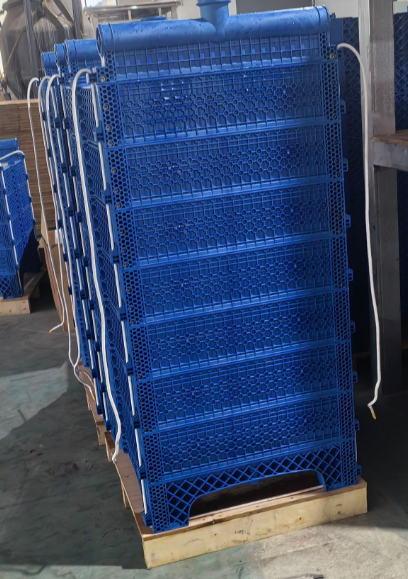
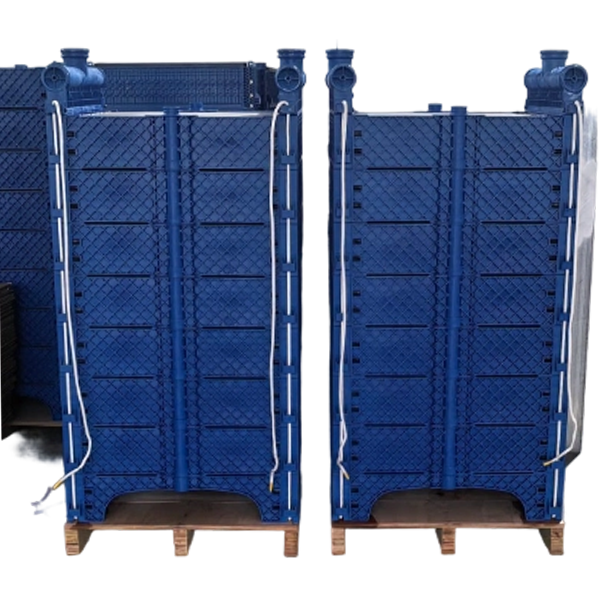
JMtech-SICFS-600x145x6-0.177-42-Module tower
This product has 42 flat sheet membranes for one layer, effective filter area for one layer is 7.5m2, filter accuracy 100nm. Each tower can contain 1-10 layers, normally within 8 layers. This is one of the most popular product of JMFILTEC.
The core elements of structural design for membrane components are:
1. Filling density
2. Hydraulic distribution
3. Pipeline arrangement
The silicon carbide flat sheet membrane modules we design and produce are modular, expandable filtration units consisting of a glass fiber reinforced plastic shell and flat sheet ceramic membranes.
The membrane module integrates water production channels internally and can withstand high pressure. Our membrane modules have undergone CFD fluid mechanics simulations and actual testing to achieve the best performance of flat sheet ceramic membranes. Each standard membrane module contains 2 water production channels, with a maximum water production capacity of up to 1200LMH (9m3/h). None of the shell and the components contains any mental, so it can be used in the harshest applications while extending its service life. Additionally, there is no need for surrounding frames or hose connections between membrane modules.
Silicon carbide flat sheet membrane products
Silicon carbide flat sheet membrane is made by sintering high-purity silicon carbide powder at high temperature, and is currently the membrane material with the best hydrophilicity and anti pollution ability.
● The membrane surface with high negative charge can ensure excellent pollution resistance across a wide pH range;
● Ideal operating conditions - when the PAC addition makes the pH less than 6, the membrane surface can maintain a negative charge of -25~-30 millivolts, making it difficult for soluble organic carbon and transparent exopolymer particles to adhere to the membrane surface;
● It is easy to remove negatively charged substances in water from the membrane surface, such as bacteria, algae, MLSS, transparent exopolymer particles, and oil substances.
Product Features and Advantages
★ The core material silicon carbide has good hydrophilicity, higher porosity, excellent cleaning recovery ability, and no fear of oil pollution;
★ High-throughput operation requires less filtration area and saves significant costs;
★It has good anti-pollution performance, is resistant to water inlet fluctuations, and has stable long-term operating flux;
★It has good chemical stability, acid and alkali resistance, strong oxidant resistance, high temperature resistance, organic dissolution resistance, good washability and easy recovery of flux after cleaning;
★ Suitable for seawater and other challenging applications without any corrosion risks;
★ Full modularity allows the number of membrane modules per membrane tower to be changed at any time to optimize project costs or increase future processing capacity;
★ The most compact design - no need to set up independent water production pipelines, the membrane system is highly integrated;
★Competitive investment cost and excellent life cycle.
JMtech-SICFS-600x145x6-0.177-42-Module tower has 42 flat sheet membranes for one layer, effective filter area for one layer is 7.5m2, filter accuracy 100nm. Each tower can contain 1-10 layers, normally within 8 layers. This is one of the most popular product of JMFILTEC.
The core elements of structural design for membrane components are:
1. Filling density
2. Hydraulic distribution
3. Pipeline arrangement
All membrane component structural designs are aimed at balancing filling density and hydraulic distribution in order to achieve maximum water production efficiency and operational stability.
From both the perspective of materials and the design of membrane components, silicon carbide flat sheet membranes have significant advantages in membrane application technology.
Application Scenarios
Membrane bioreactor
Pretreatment of seawater desalination
High standard purification of drinking water
Solid liquid separation of inorganic particles
Sludge concentration
Powder activated carbon coupled full amount dual effect filtration (removal of PFAS)
Ceramic membranes are widely used in municipal water supply due to their stable separation performance and efficient retention of pollutants. They can effectively remove harmful substances such as suspended solids, pathogenic microorganisms, and some organic matter from the raw water. According to NTU data monitoring of various projects, the effluent quality of projects using ceramic membranes as the core treatment unit is basically between 0.02-0.05, far higher than the water quality requirements of modern water plants, ensuring the safety and health of urban residents' drinking water with high quality.
● Fearless of abnormal changes in water quality: Ceramic membrane technology has strong adaptability to fluctuations in raw water quality. Even in the event of abnormal changes in source water quality, it can maintain stable effluent quality, fully ensuring the stability and reliability of the water supply system.
● Long service life and low operation and maintenance cost: The long service life and chemical cleaning resistance of ceramic membranes reduce operation and maintenance costs and membrane component replacement frequency, meeting the long-term stable operation needs of municipal water supply facilities.
● New process integration and optimization: Our company effectively integrates and upgrades ceramic membranes with other traditional or advanced water treatment technologies (such as air flotation, ozone, and sodium generator) to build a short process and high-quality water purification process, improving the overall energy efficiency and treatment results of municipal water plants.
Will ceramic membranes replace PVDF membranes?
It's been a year since the EU published its proposal to restrict per- and polyfluoroalkyl substances (PFAS). At the time, there were concerns that the industry's preferred membrane material, polyvinylidene fluoride (PVDF), might conflict with the proposal. Dr. Graeme Pearce discusses whether PVDF membranes still have a long-term future, and if not, whether ceramic membranes would benefit from restrictions.
Vinyl difluoride (VDF) belongs to the PFAS family.
In the membrane industry, the most commonly used material is PVDF (polyvinylidene fluoride). However, PVDF is considered a PFAS and therefore may not meet certain exemption conditions and be exempted accordingly.
Recent statements suggest that there has been little change in the voices for or against the continued use of PVDF.
However, in terms of the right to produce and use PFAS in water treatment products, the outlook is not optimistic.
The complex issue of how to balance the different views of industry and users and the environmental and health concerns of all 27 EU member states will continue to be a headache. However, as things stand, PVDF membranes are likely to be restricted by the EU.
Market moves towards ceramic membranes
PVDF has become a key material for water treatment membranes, with a clear market lead in certain applications.
Are there signs that ceramic membranes will capitalize on the uncertain future of PVDF? The answer seems ambiguous!
Some markets had already moved away from polymers long before the discussion of PFAS.
For example, about half of the UK municipal markets now specify ceramic membranes, and the world's largest ceramic membrane drinking water plant will be commissioned near Birmingham within a year.
As early adopters of polymers, several bad experiences by some users in the UK have led decision makers in these companies to now say, "never use PVDF again." Although the development problems of those early generation products are actually a thing of the past, these emotional traumas have turned into an irreversible view.
Comparison of ceramic membranes and PVDF membranes in the market
Most markets require a fair competition when evaluating polymer and ceramic material options.
In the early days of reverse osmosis technology, engineers could make a comprehensive comparison of the new standardized product flow, removal rate and price.
When ultrafiltration emerged, comparisons became easier because particle removal was taken for granted and the only parameters to consider were flow and price.
Arguably, considering only flow and price was a step too far because of the different modes, but the desire to make a simple comparison led to the spread of this approach.
The advent of ceramic membranes called this flux- and price-focused comparison approach into question. Ceramics have higher fluxes, but are also more expensive.
Of course, there are other suitability issues or system and operational knock-on effects to consider when considering a project.
This is exactly why ceramic membranes have struggled to make a significant breakthrough in markets that are still open to both options. Attempting to make broad comparisons when the performance and price differences are so wide can be misleading. Maintaining the status quo is clearly less risky.
A level playing field hinders the spread of ceramic membranes
Ceramic membranes perform best in industrial markets where end users are not concerned with flow and price between different membrane suppliers, but only with the value and return that the membrane system provides for their application.
Industrial applications often present challenges such as membrane fouling, corrosive feeds, and other issues, which are areas where ceramic membranes are well suited.
What can ceramic membranes do to increase their appeal in the broader market? Can the discussion be pushed to focus on issues that are difficult for polymer membranes to address?
Because of the diverse needs of a wide range of water treatment applications, the playing field is most unfavorable to ceramic membranes.
Where ceramic membranes outperform PVDF membranes
Ceramic membranes perform better in challenging feeds because the membranes can be restored using aggressive physical or chemical cleaning methods. Today, the news is full of reports of extreme weather events, localized flooding, turbidity spikes, and algae blooms.
These events are long-foretold consequences of climate change and are now becoming a reality.
For the end user, it is much better to have a ceramic membrane system that can recover its performance through cleaning and maintenance when feed conditions are out of the norm than to rely on a warranty that has no real effect.
Another issue is that ceramic membrane systems take up less space. This has a direct impact on floor space due to the high flow rates. In addition, ceramic membrane processes are generally simpler and, therefore, more compact.
Ceramic membrane advantages could mean the end of PVDF membranes
Ceramic membranes are certainly taking advantage of opportunities presented by the plight of the polymer membrane market. It is likely that restrictions on the use of PVDF membranes will take several years to be implemented.
However, while fluorocarbons in general, and PFAS in particular, have had a hugely positive impact on society, their negative environmental and health effects will ultimately mean that their use will be limited to areas where they are truly necessary.
As an industry, we need to consider the wider use of ceramic membranes and accelerate their adoption. This will ensure that we learn the undoubted application lessons in a timely manner and gain better experience than we did in the early days of polymer membranes.