

13396532368






Aluminum Ceramic Membrane – Brief Introduction
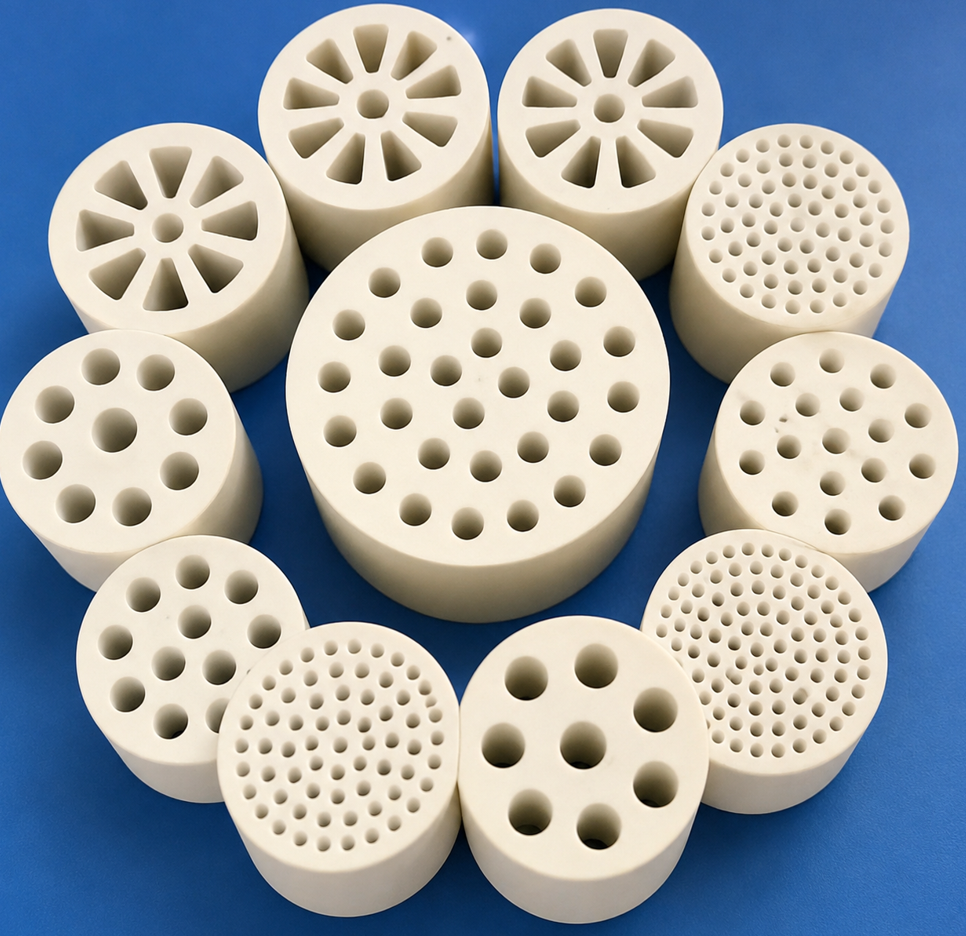
An aluminum ceramic membrane, commonly called an alumina (Al₂O₃) ceramic membrane, is a durable inorganic filtration membrane made primarily from aluminum oxide. It has a porous ceramic structure that separates suspended solids, bacteria, oil droplets, and other contaminants from water or industrial liquids.
Alumina ceramic membranes offer high mechanical strength, good chemical and thermal resistance, long service life, and stable filtration performance. They can be cleaned using chemical agents and backwashing, making them suitable for long-term operation. Compared with polymeric membranes, alumina ceramic membranes generally have better resistance to harsh operating conditions and higher temperatures.
They are widely used in drinking-water treatment, municipal and industrial wastewater treatment, food and beverage processing, pharmaceutical production, and other liquid-separation applications. Alumina ceramic membranes are available in different pore sizes and are commonly used for microfiltration (MF) and ultrafiltration (UF) applications.
Unlike polymer membranes, ceramic membranes are:
- Highly resistant to chlorine
- Resistant to high temperatures
- Chemically stable
- Long lasting (typically 20+ years)
Removes
✔ Suspended solids (SS)
✔ Turbidity
✔ Algae
✔ Protozoa (Giardia, Cryptosporidium)
✔ Most bacteria
Partial virus removal (not complete)
Silicon Carbide (SiC) Ceramic Ultrafiltration (UF)
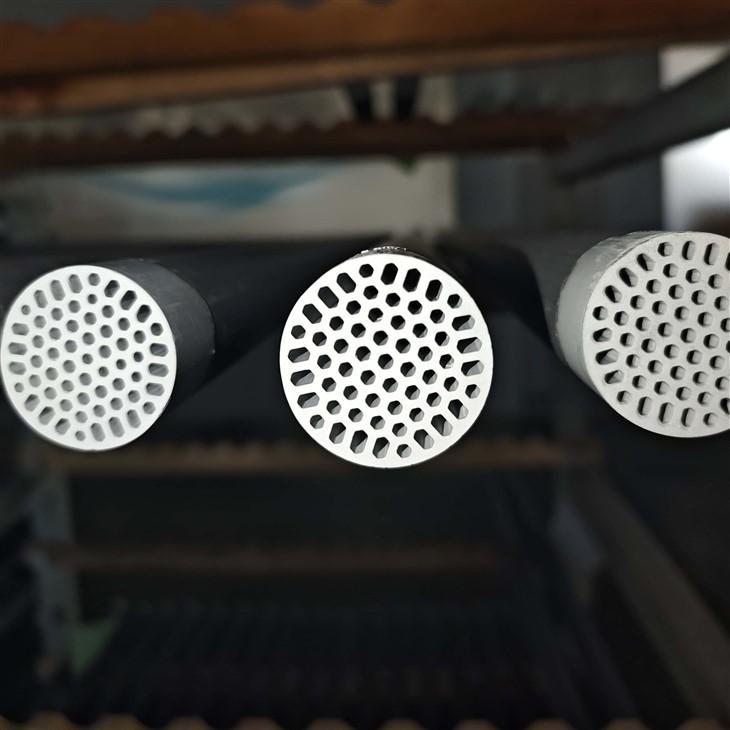
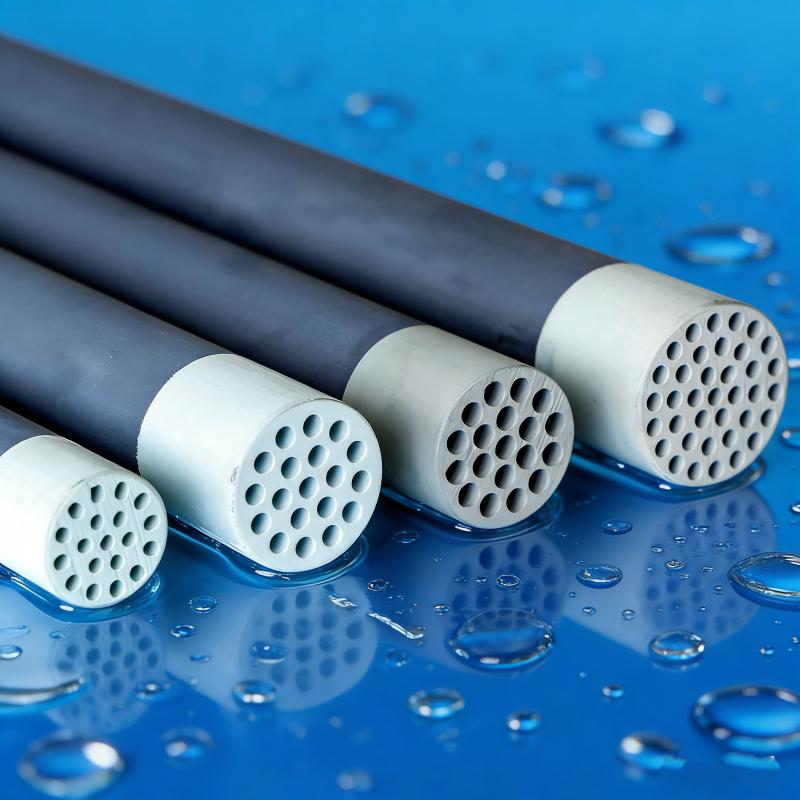
Typical specifications
|
Item |
Typical Value |
|---|---|
|
Material |
Silicon Carbide (SiC) |
|
Filtration type |
Ultrafiltration (UF) |
|
MWCO |
50–300 kDa |
|
Equivalent pore size |
~0.02–0.05 μm |
|
Operating pressure |
0.5–3 bar (sometimes higher depending on application) |
|
Filtration mode |
Crossflow or dead-end |
Removes:
✔ Suspended solids
✔ Turbidity
✔ Bacteria
✔ Protozoa
✔ Most viruses
✔ Colloids
✔ Oil emulsions
Comparison
|
Parameter |
Aluminum UF |
SiC UF |
|---|---|---|
|
Membrane material |
Alumina |
Silicon Carbide |
|
Filtration rating |
Microfiltration |
Ultrafiltration |
|
Typical pore size |
<0.1 μm |
0.02–0.05 μm |
|
Particle removal |
Larger suspended solids |
Fine colloids and macromolecules |
|
Bacteria removal |
Excellent |
Excellent |
|
Virus removal |
Partial |
High (though not absolute sterilization) |
|
Turbidity removal |
Excellent |
Excellent |
|
Oil emulsion removal |
Limited |
Excellent |
|
Fouling resistance |
Good |
Excellent |
|
Mechanical strength |
High |
Very high |
|
Thermal conductivity |
Moderate |
Very high |
|
Abrasion resistance |
High |
Outstanding |
|
Chemical resistance |
Excellent |
Outstanding |
|
Typical lifespan |
20–30 years |
20–30+ years |
Which Performs Better?
Drinking Water
Aluminum ceramic membrane has a strong track record because:
- Lower energy consumption
- High water recovery
- Proven reliability in municipal drinking water plants
- Widely accepted by Japanese utilities
Industrial Wastewater
SiC UF is generally preferred because it offers:
- Better resistance to fouling
- Higher permeability
- Better handling of oil and grease
- Better tolerance for abrasive particles
- Higher sustainable flux under difficult feed conditions
Water Quality Comparison
|
Contaminant |
AluminumUF |
SiC UF |
|---|---|---|
|
Sand |
✔ |
✔ |
|
Turbidity |
✔ |
✔ |
|
Algae |
✔ |
✔ |
|
Bacteria |
✔ |
✔ |
|
Viruses |
Partial |
High |
|
Emulsified oil |
Limited |
✔ |
|
Humic substances |
Limited |
Better, but nanofiltration or RO is needed for significant dissolved organic removal |
|
Dissolved salts |
✘ |
✘ |
Summary
Alumina ceramic microfiltration systems are optimized for large-scale municipal drinking water and wastewater treatment, where stable operation, long membrane life, and low operating costs are key priorities. In contrast, silicon carbide ceramic ultra filtration membranes provide finer separation and superior resistance to fouling and abrasion, making them particularly well suited for challenging industrial wastewaters, oily produced water, mining, and high-solids applications.
For oil & gas produced water—such as the Pakistan project you've been working on—SiC ceramic UF is generally the stronger technical choice because it achieves finer separation of emulsified oil and colloids while maintaining higher flux under harsh operating conditions.
JMF is a manufacturer of SiC ceramic membranes. We are the largest manufacturer of this membrane in China, and we produce both flat sheet module and tubular modules.