

13396532368






Summary
There is currently no U.S. municipal drinking water plant using ceramic membranes at the scale of the world's largest installations. Most U.S. plants use polymeric UF/MF.
Major U.S. Projects
|
Project |
Location |
Capacity |
Notes |
|
Parker Water Treatment Plant |
Parker, Colorado |
10 MGD (~38,000 m3/day) |
Municipal drinking water; ceramic UF. |
|
xAI Water Reuse Facility |
Memphis, Tennessee |
13 MGD (~49,200 m3/day) |
Wastewater reuse for data center cooling; ceramic MBR. |
Why ceramics?
- Long service life (20–30● years)
- Aggressive chemical cleaning
- Abrasion resistance
- Lower fouling for difficult waters
Global comparison
Hampton Loade (UK): 55 MGD
Choa Chu Kang (Singapore): ~48 MGD
xAI (USA): 13 MGD
Parker (USA): 10 MGD
1. Parker Water Treatment Plant (Colorado)
This is one of the earliest and largest U.S. municipal drinking water plants using ceramic membranes.
Capacity
● 10 MGD
● approximately 38,000 m³/day
Technology
● Ceramic ultrafiltration
● Coagulation ● powdered activated carbon pretreatment
● ceramic membranes
● system integration
Why it's important
● First large-scale municipal ceramic membrane installation in the U.S.
● Demonstrated ceramic membranes could compete with polymeric UF for surface water treatment.
● Designed for Colorado's challenging raw water quality.
2. xAI Water Reuse Project (Memphis, Tennessee)
Although not a drinking water plant, this is becoming the largest ceramic membrane project in the United States.
Capacity
● 13 MGD
● 49.2 million liters/day
Purpose
● Treat municipal wastewater
● Produce reclaimed water for cooling one of the world's largest AI data centers
Technology
● Ceramic membrane bioreactor (MBR)
● ceramic membranes
The project has been described as the world's largest ceramic membrane bioreactor (MBR) for wastewater reuse.
Why aren't there more large ceramic membrane plants in the U.S.?
The U.S. membrane market has historically been dominated by:
● DuPont
● Veolia ZeeWeed
● Toray
● SUEZ (now Veolia)
● Kubota
These companies mainly supply polymeric hollow-fiber membranes, which generally have lower upfront capital costs. Ceramic membranes offer:
● 20–30● year service life
● Tolerance to aggressive chemical cleaning
● Better resistance to abrasion
● Lower fouling in difficult waters
However, the higher initial investment has limited widespread adoption.
Comparison with the world's largest ceramic membrane plants
|
Project |
Country |
Capacity |
|---|---|---|
|
Hampton Loade WTP |
United Kingdom |
55 MGD (210,000 m³/day) |
|
Choa Chu Kang Waterworks |
Singapore |
≈48 MGD (180,000 m³/day) |
|
xAI Water Reuse (MBR) |
USA |
13 MGD (49,200 m³/day) |
|
Parker WTP |
USA |
10 MGD (37,850 m³/day) |
The UK's Hampton Loade Water Treatment Works is currently recognized as the world's largest ceramic membrane-based drinking water treatment plant.
There is a significant opportunity in North America. Ceramic membranes are increasingly being evaluated for:
● PFAS removal pretreatment
● Water reuse and potable reuse
● Semiconductor manufacturing
● Data center cooling water
● Mining water treatment
● Produced water from oil & gas
● Food and beverage processing
The U.S. ceramic membrane market is still relatively small compared with Europe and Japan, leaving room for new suppliers and technologies.
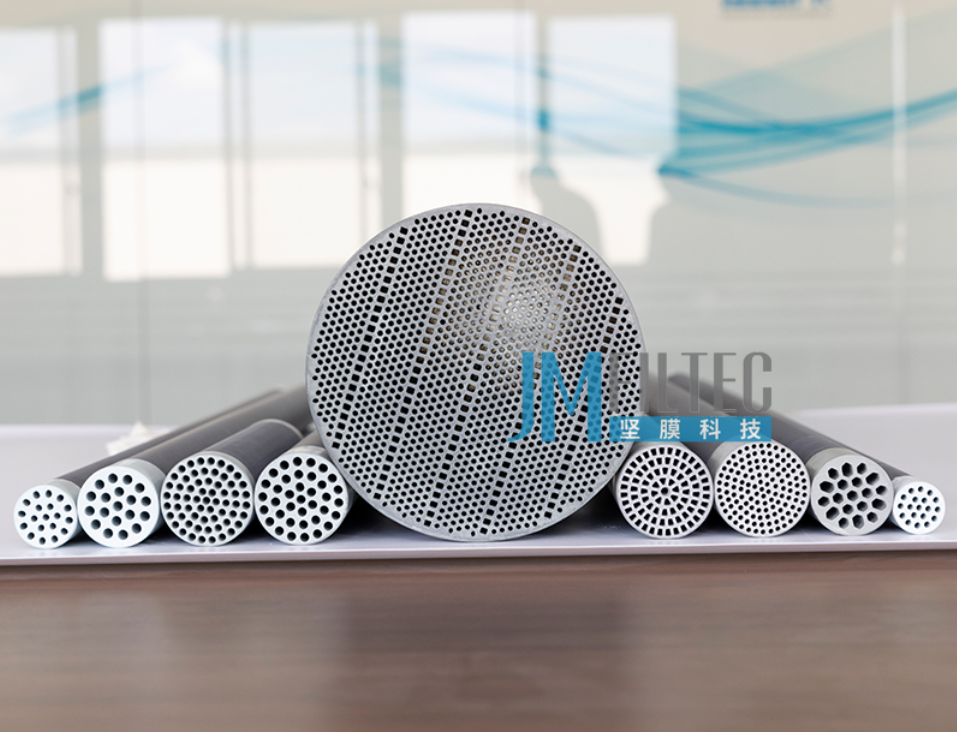
JMFILTEC is the largest silicon carbide ceramic membrane manufacture in China. We have finished a lot of ceramic membranes projects in China and in foreign market. Our USA partner has finished an excellent drinking water installation using our membrane module N200.